What Happens When a Rural Community Gets Access to Real Healthcare? 75,000 Children Found Out.
The story of EHAI’s I-SCEH project in Oyo State and what Nigeria’s most vulnerable children have been living without
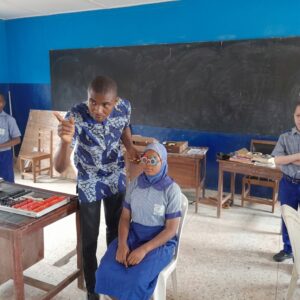
Imagine an eight-year-old girl sitting at the very front of her class.
She cranes her neck toward the board. She squints. She copies down the wrong answers. Her teacher thinks she is distracted. Her mother thinks she is slow. But she has never had her eyes examined. In the community where she lives, one of four Local Government Areas across Oyo State, Southwest Nigeria, no child has. Eye care is something that happens in the city, in hospitals with long queues and fees most families cannot afford, if it happens at all.
Then EHAI came.
Before the Intervention: What the Data Was Already Telling Us
This is not one child’s story. This was the reality for thousands of children beyond these communities in Oyo State and the numbers make the scale of that impossible to ignore.
| The State of Eye Health in Nigeria
• Over 1.6 million Nigerians are visually impaired or blind — and more than 84% of those cases are preventable or treatable (Wiley Public Health Challenges, 2024) • 35% of Nigerians cannot access eye care at primary healthcare facilities — meaning the most basic level of care is already out of reach for millions (Wiley, 2024) • Eye care services are overwhelmingly concentrated in urban areas, leaving rural communities without access to even the most basic screening services (African Vision and Eye Health, 2024) • In Jigawa State alone, 81,797 eye-related complications were recorded in 2024 — in a state operating with a fraction of the specialists it needs (AllAfrica, 2025) • Children are among the most vulnerable: globally, an estimated 90 million children are blind, with Sub-Saharan Africa bearing a disproportionate share of the burden (BioRes Scientia, 2025) • Over 50% of children die within one to two years of becoming blind, as the conditions that cause blindness are also causes of child mortality (CBM Nigeria / IAPB) |
In Oyo State, as in communities across Nigeria, children were going to school unable to see the board. They were being labelled slow, inattentive, or difficult when the real issue was that no one had ever checked their eyes. Conditions that could be corrected with a pair of glasses were quietly stealing futures.
The Intervention: I-SCEH Project
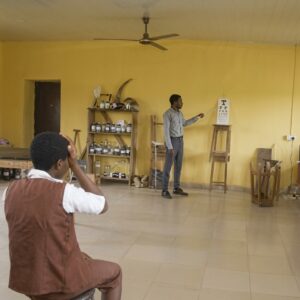
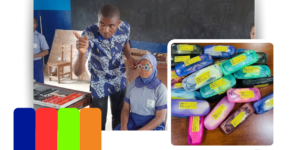
In response to this gap, the Equitable Health Access Initiative (EHAI) implemented the Integrated School and Community Eye Health (I-SCEH) Project in Oyo State, under the USAID Childhood Blindness Programme (CBP). The project targeted four Local Government Areas: Akinyele, Ibadan North, Ibadan South-East, and Ibadan South-West — covering both urban slum communities and high-density population areas.
The approach was deliberate and multi-layered. Rather than running a one-off outreach that would reach a few hundred people and disappear, EHAI integrated eye health services directly into the systems communities already used: schools, primary healthcare facilities, and community structures. The goal was not a temporary fix. It was a lasting change in how eye health was accessed and delivered.
To make that possible, EHAI invested heavily in people first.
What EHAI Actually Did: The Work Behind the Numbers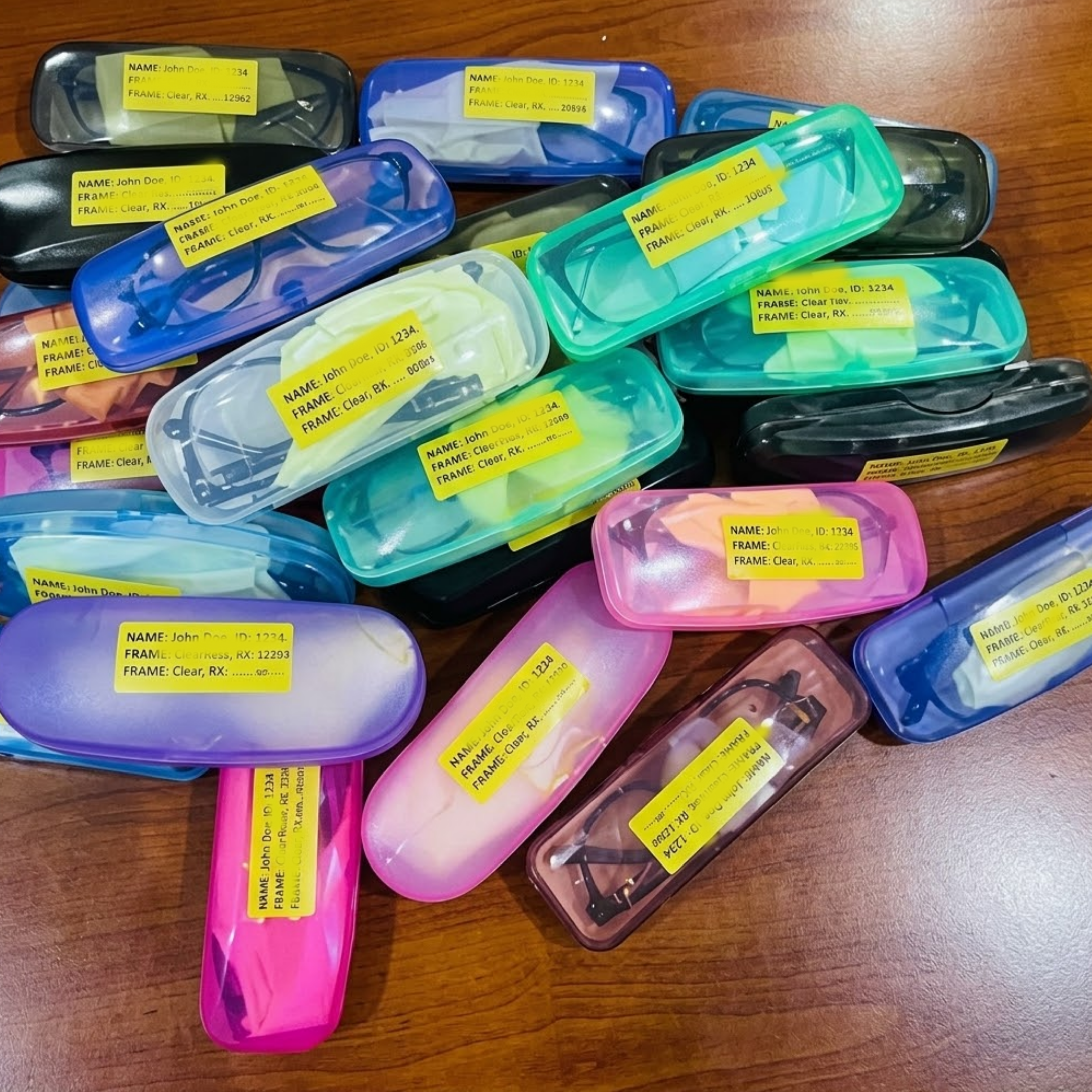
| I-SCEH Project — Verified Outcomes (EHAI Nigeria)
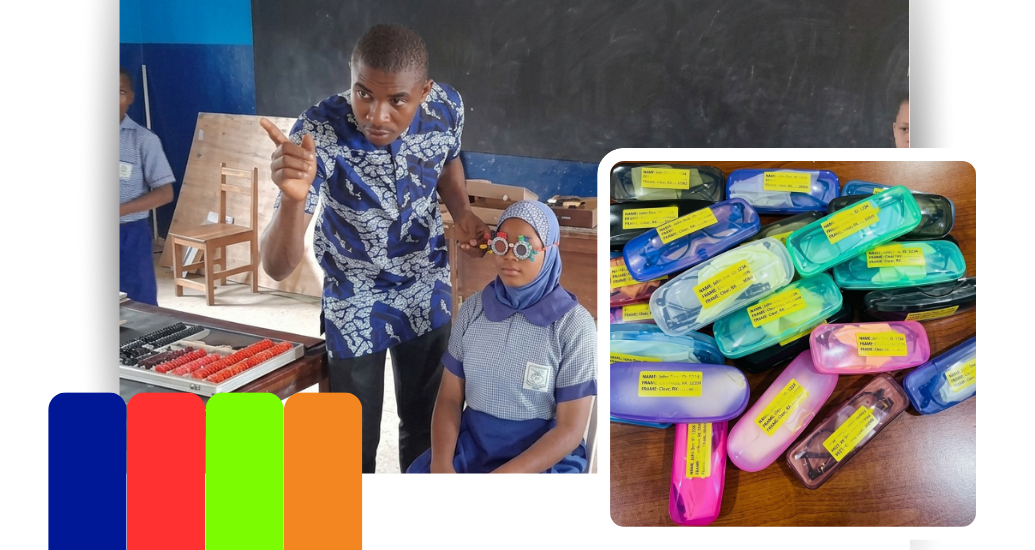
• 120 healthcare workers trained to screen children and deliver quality eye care services • 48 medical records staff trained to ensure accurate documentation and referral tracking • 320 teachers trained to identify signs of visual impairment in their classrooms — turning every school into an early detection point • 40 key informants trained and embedded in communities to extend awareness and referrals • Over 75,000 children screened for visual impairments and eye conditions • 6,000 children provided with corrective lenses — glasses that changed how they see the world • 400 children received services for low vision • 2,500 children treated for various eye conditions through non-surgical interventions • Linkage and referral services provided to children requiring specialist or surgical care |
These are not projections or estimates. These are children who were screened, diagnosed, treated, and linked to care — most of them for the very first time in their lives.
After the Intervention: What Changed
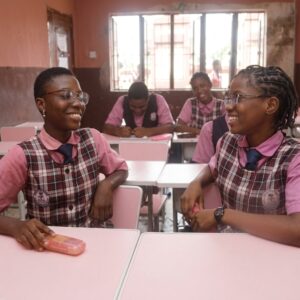
When the screening teams arrived at schools in Akinyele and Ibadan South-East, they found children who had been sitting in classrooms for years without ever being able to clearly see the faces of the people teaching them. Teachers who had been trained through the project began flagging students they had previously dismissed. Parents who had quietly accepted that something was “wrong” with their child learned, for the first time, that there was a name for what was happening — and a solution.
For the 6,000 children who received corrective lenses, the change was immediate and visible. Children who had been struggling academically began to engage. Children who had been withdrawn began to participate. For many, it was the first time they had ever seen the board clearly from their seat in a classroom.
For the 2,500 children treated for eye conditions and the 400 who received low vision services, the intervention came at a critical window. Delayed treatment in children can lead to irreversibly impaired sight. Catching these conditions when EHAI did — before they progressed to permanent damage — was the difference between a child who could see and one who could not.
And for communities, something else shifted too. Teachers now knew the signs. Health workers now had the skills and tools to screen. Primary healthcare facilities in four LGAs now had integrated eye health as a permanent part of how they served their communities. The intervention did not just treat 75,000 children. It changed the infrastructure around them.
Why This Matters Beyond Oyo State
The question “what happens when a rural community gets access to real healthcare?” sounds philosophical. The I-SCEH project answers it with data.
Children stop being mislabelled. Futures that were quietly narrowing begin to open. A teacher with the right training becomes a detection point. A health worker with the right skills becomes a referral gateway. A community that was invisible to the health system becomes legible to it.
This is what equity in healthcare actually looks like: a deliberate integration of services into the places and systems that communities already trust and use. It is also what EHAI Nigeria was built to do.
EHAI’s mission is not to substitute for a functional health system. It is to demonstrate — with evidence, with rigour, and with real communities — what becomes possible when innovation and equity drive public health practice.
Learn more about the I-SCEH project here.
| EHAI shows up. Support us, partner with us, or learn more about our work at ehainigeria.org
EHAI Nigeria. Innovating for Healthier Lives. |
Sources & References
-
EHAI Nigeria — I-SCEH Project Page: ehainigeria.org/child-blindness-program
-
Wiley Public Health Challenges (2024) — “Integrating eye care into primary healthcare in Nigeria” — onlinelibrary.wiley.com
-
African Vision and Eye Health Journal (2024) — “Childhood visual impairment causes and barriers to accessing eye care in Africa” — phcfm.org
-
BusinessDay Nigeria (2024) — “World Sight Day 2024: Prioritising eye health, preventing blindness in Nigeria” — businessday.ng
-
BioRes Scientia / International Journal of Biomedical and Clinical Research (2025) — “Causes of Childhood Blindness and Visual Impairment in Northern Nigeria” — bioresscientia.com
-
AllAfrica / Allafrica.com (2025) — “Nigeria: Blindness Rises in Jigawa Amid Shortage of Ophthalmologists” — allafrica.com
-
CBM Nigeria / IAPB — “Improving Access of Communities to Child Eye Health Services through PHC Workers in Nigeria” — iapb.org
-
Federal Ministry of Health Nigeria — National Eye Health Strategic Development Plan 2024–2028 — osnnigeria.org