

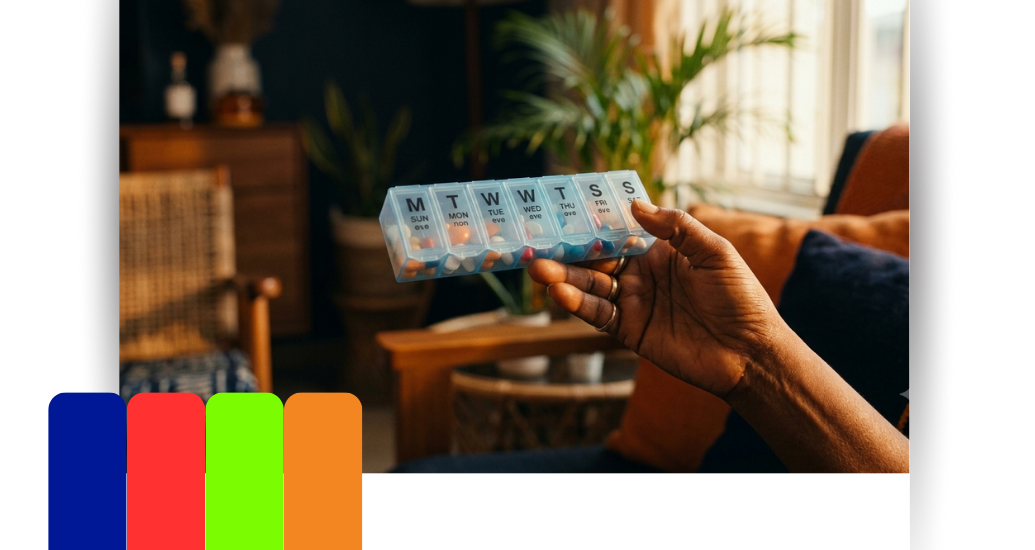
“I Felt Fine, So I Stopped”
The Silent Danger of Skipping Medications and the Simple Fix
“I felt fine, so I stopped.”
It’s one of the most common sentences said in clinics across Nigeria — usually right before a story that ends in a hospital ward.
Millions of us are on daily medication for conditions like hypertension, diabetes, or other chronic illnesses. And for a lot of us, the moment the symptoms disappear, so does the discipline. We assume feeling better means being cured. It rarely does.
Feeling Fine Is Not the Same as Being Fine
Here’s the uncomfortable truth about conditions like hypertension: they’re often silent. You can have dangerously high blood pressure and feel completely normal: no headache, no dizziness, nothing. The absence of symptoms doesn’t mean the absence of danger. It just means the medication was working.
So when people stop taking their medication because they “feel fine,” what’s actually happening is the treatment is being switched off while the underlying condition is still very much active.
The Numbers Don’t Lie
This isn’t a rare problem. It’s the norm, with ample research that backs this up:
- In a study of hypertensive patients in Minna, North Central Nigeria, only 39.2% showed good medication adherence, meaning roughly six in ten patients weren’t taking their medication as prescribed.
- In Southwest Nigeria, only about a third of hypertensive patients had their blood pressure under control, a gap researchers linked partly to poor adherence.
- Among diabetes patients in one Nigerian study, good adherence to anti-diabetic medication was as low as 17.1%, and a separate study in Edo State found 80% of diabetes patients had poor adherence, which correlated with higher cholesterol levels and more frequent hospital readmission.
- Across several Nigerian studies, forgetfulness, not cost or side effects, was cited as the single most common reason patients missed doses.
Globally, the picture is just as sobering: the World Health Organization estimates that roughly half of all patients with chronic illness don’t take their medication as prescribed, contributing to an estimated 125,000 preventable deaths a year in the US alone, and tens of billions of dollars in avoidable healthcare costs worldwide.
What Actually Happens When You Stop
Stopping a medication abruptly doesn’t just mean the condition slowly comes back. In many cases, it comes back worse than before treatment started. Health experts call this the “rebound effect”.
For blood pressure medication specifically, suddenly stopping certain drugs can cause blood pressure to spike back up sharply, sometimes triggering the very emergencies the medication was preventing, including stroke or heart attack. This is precisely why hypertension is one of the most dangerous conditions to self-manage without consistency.
Why People Stop Anyway
- They feel better and assume they’re cured
- The cost of continuous medication adds up over time
- They simply forget — life gets busy, and a pill schedule is easy to lose track of
- Side effects go unreported to a doctor, so nothing changes
None of these reasons make someone careless. They make them human. Which is exactly why the solution shouldn’t depend on willpower or memory alone.
The Simple Fix
What if there is a system that keeps you reminded to take your medications and shows your doctor a history of the medication you have been on over the months or even years? It’s more than an alarm because you can’t just switch it off when you don’t feel like taking your meds. It’s called the WellTimer, an Android app created by EHAI Nigeria to help the common Nigerian keep up with and track their medications.
With WellTimer,
- You can set up a schedule and dosage of your medication
- Get daily reminders right in your notification tabs
- Get rewards when you achieve consistency
- See a history of your medication adherence useful for your caregivers or physician.
Staying consistent with your medication shouldn’t be hard.
Download WellTimer here
Consistency isn’t a personality trait. It’s a system. Let Well-Timer be yours.
Sources
-
World Health Organization – Medication adherence estimates and Medication Without Harm initiative
-
Harvard Health Publishing – “Stopping a medication? Check first, quit safer”
-
Weill Cornell Medical Center – Adverse Effects of Suddenly Stopping a Medicine
-
Adherence and blood pressure control studies – Minna (Niger State), Umuahia (Abia State), and Southwest Nigeria
-
Medication Adherence in Type 2 Diabetes Patients in Nigeria – Jackson et al.; Edo State medication belief study
-
PMC/NCBI – “The Unmet Challenge of Medication Nonadherence”